
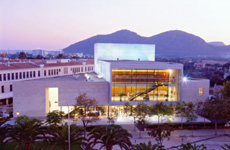
| Auditorium
It is considered one of the most relevant architectural works from the XXI century in Mallorca and it combines a design of simple forms with pure materials such as glass, concrete, wood or stainless steel. It is used for all kinds of cultural activities. It also holds conferences and events.

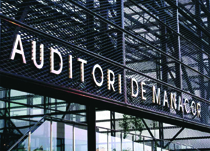
| Auditorium
It is the latest cultural infrastructure in Mallorca, opened in October 2012 five years behind schedule. The building stands out for its structure and functionality, in which design several architects have collaborated. Two of them, Lluís Dilmé and Xavier Fabre, led the project to rebuild the Liceu in Barcelona after the fire in 1994.
The building has a floor area of 5,500 square meters and has a main hall (capacity 785 people), multi-purpose hall (125 people) and meeting room (50 people). It has a large stage with pit for the musicians, plus two rehearsal rooms and nine dressing rooms.
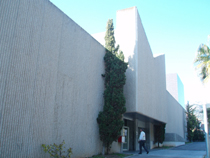
| Auditorium
Building dedicated to the culture in this tourist resort on the coast of Calvià. Facilities include an auditorium with excellent acoustics, a multipurpose room, conference hall, workshops and computer area. It maintains an active schedule throughout the year with concerts, plays and lectures.
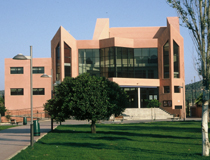
| Auditorium
It is used for performing arts and for the celebration of conferences and conventions. Its equipment includes five working rooms, a main hall and four cabins of translation. In addition, every September, it holds the International Dance Festival, Dansamàniga.
| Museum
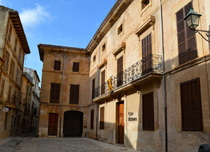
This stately building, located in the center of Pollença, was opened in November 2014 after a process of rehabilitation which has converted it into a house museum, home to the Historical Archive and Municipal Library. Its splendid facilities also serve to develop all kinds of activities in small format to promote reading, history and culture in general.
The House Museum offers visitors an example of architecture, history and ethnological aspects of a family of rural notables of Pollença in the second half of the nineteenth and early twentieth centuries. In the intervention carried out in the building by the City Council, most of the historical architectural elements and spaces characteristic of the old house have been conserved. Both the facade and the entrance hall, the kitchen, the imperial staircase, dining mezzanine and the first part of the first floor maintain their traditional furniture and ornaments
The building also houses the Historical Archives of Pollença, considered one of the best local files of the Balearic Islands, as well as private collections but of great documentary value. Among them are, the archive and library of the family Can Llobera, former owners of the building or the library that the poet and chronicler of the villa Miquel Bota donated to the City of Pollença.
Finally the Municipal Library, which occupies two distinct spaces on the ground floor (area for preschool and primary) and in the front porches of the building (reserved for youth and adults). In the latter the majority of the more than 19,000 books that make up its collection, including the local collection of themes of Pollença.

| Cultural Center
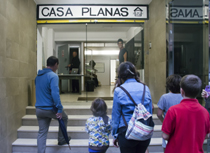
Casa Planas is located in the old offices and laboratories of Josep Planas Montanyà and was created, among other things, with the desire to pay tribute to this outstanding photographer, entrepreneur, artist, collector and creator.
History
Josep Planas Montanyà inaugurated Casa Planas in 1947, a company that would have more than 14 establishments and produced millions of images. His camera captured tourism, economic and social development between the 50s and 60s. The history of photography and its technical evolution in the Balearic Islands can not be understood without this character who introduced the color and concept of industrial photography.
In addition, he developed innovative techniques, incorporating an aerial point of view with the acquisition of a helicopter. In this way he acquired the monopoly of the industrial production of postcards and established the iconography of the tourist boom of Mallorca. This allowed the image of the island to spread internationally.
Planas photographed intellectuals, artists and politicians: Blai Bonet, Camilo José Cela, Robert Graves, Miró, Joan Fontaine, Errol Flynn, Charles Chaplin, Grace Kelly, Lana Turner, Franco, Juan Carlos I de Borbón, Fraga ... Commercial (mainly hotel sector): Maricel, Mediterranean, Bahia Palace, Fénix ... inaugurations of hotels and buildings such as the Auditorium of Palma. He also photographed landscapes from every corner of the islands.
The documentary and artistic archive of Planas is of unquestionable patrimonial value.
Centre Cultural Casa Planas
Casa Planas was created with the idea of recovering the heritage of an old photography factory (a space in disuse) and turning it into a self-managed, free center of resistance and artistic resilience. Its mission is to provide a physical space for enterprising and professional artists related to the world of culture, a place where they can carry out their projects independently and, in turn, cooperate with other professionals who share the same physical space Creating a platform of experimentation and creativity.
To provide this service, Casa Planas offers offices, studios and work tables (coworking), with sales of office supplies, art, books and bar / cafeteria service.
The center also offers a multi-purpose training room that is rented both to users of the space and to external users who want to carry out workshops, masterclass or conferences, with projector service, complemented as a meeting room.
The basement and semi-basement are intended for the rental of studios for artists. In these, an activity of creation and learning is developed, offering the possibility of knowing the whole research process that the artists perform to reach the final result of their work. Residence programs, moreover, have become vital as promoters of alternative exhibition circuits, outside traditional art institutions.
In this space there is also a room to hold events, workshops and activities, as well as concerts in acoustic, theater, talks, projections, dance classes and a future set.
For the time being, the center has a printing and screen printing workshop, an analogue photography laboratory, a music group, two marketing and design companies, an audiovisual director specialized in videodance, three plastic artists, an illustrator, an urban art specialist, a shoe designer and an office of graphic arts.
Among the coworkers is a management agency for artists, an art project management cooperative, a photographer, a dancer, a 3D animator, an anthropologist and a screenwriter and film director. The center already has more than 2,800 members.
Palma is the scene of discussion and negotiation of various issues concerning cultural policies. For this reason, the Center decided to initiate actions aimed at creating more inclusive policies to give visibility in neighborhoods where the lack of cultural proposals was evident. Casa Planas also aims to create networks with other entities at regional, national and international level.
| Auditorium
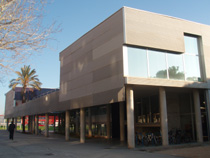
The auditorium inside the Conservatory is covered entirely in wood, which endows it with an excellent acoustic and vanguard design. It holds several concerts throughout the year (apart from the academicians). Those concerts are normally programmed in one of the music festivals that are celebrated in Palma. It offers both classic and jazz music.
| Cultural Center
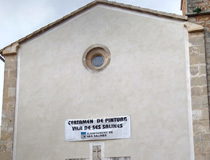
The 'Esglesia Vella' of Ses Salines was the first one in the town, built between 1664 and 1790. Today it is owned by the City Council, which adapted it to become an exhibition hall. It currently hosts temporary exhibitions of painting and sculpture and maintains an active program throughout the year with concerts and conferences.
La Església Vella is located in Plaça de Sant Bartomeu, near the new parish of Sant Bartomeu.
| Cultural Center
| Live Music Venue
| Coffee Concert
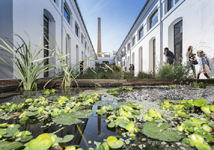
Fàbrica Ramis is a landmark building located in the heart of Mallorca. It is an industrial building constructed in 1920 to host a textile factory. In the 60s it was converted into a Leather and leather goods factory. Currently it functions as a Factory of contents and idea generation.
As a production center Cultural, manages its own agenda in which are promoted performing arts, music, visual arts, film, literature, philosophy and transmedia activity. It also encourages creation, disclosure and discussion of the emerging culture of its nearest surroundings.
Outstanding is also its wine bar and restaurant Els Tres Caragols which features local, fresh and seasonal food.Its cuisine empowers simplicity, creativity and culinary training through the Slow Food philosophy.
Services:
Cultural Events
Trade and
Conferences
Training courses
Innovation
Business
Coworking
Restaurant and Vinoteca
How to get there:
It Can be reached by train or car.
If you do drive, we recommend to reach Inca 15 0 20 minutes before the show starts.
You can park in any of these points:
1. Paying in the parking of the Mercado Municipal and walk 5 minutes.
60 minutes € 1.12
30 minutes € 0.56
20 minutes € 0.37
2. In Calle de Gràcia walk 8 minutes.
3. In Polígono Industrial de Can Matzarí walk 10 minutes.
4. In the free parking space of plaza Mallorca walk 10 minutes.